May 22, 2026 · LoadEX Dispatch Team
What Does a Freight Dispatcher Do for Small Fleets?
When you're running 2 to 10 trucks, dispatching becomes one of the biggest drains on your time. Here's what a professional freight dispatcher does — and why small fleets benefit the most.
The Small Fleet Problem Nobody Talks About
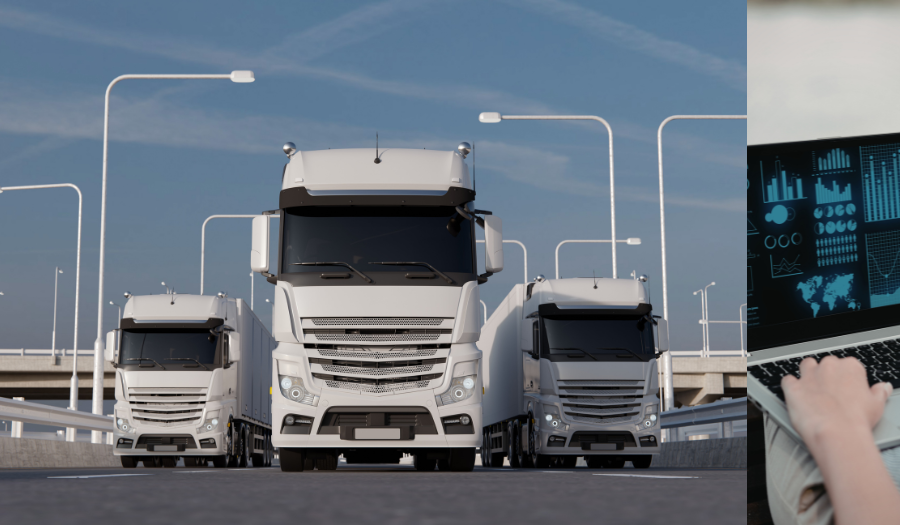
Running a small trucking fleet — anywhere from 2 to 10 trucks — puts you in a uniquely difficult position. You're too big to operate like a single owner-operator, but too small to have a dedicated operations team handling dispatch, compliance, and back-office work.
The result? Fleet owners spend 30–40% of their working hours on tasks that have nothing to do with moving freight — searching load boards, chasing brokers, managing IFTA filings, and sorting out paperwork issues. That's time not spent on growing your business.
This is exactly where a professional freight dispatcher changes the equation.
The Real Pain Points Small Fleet Owners Deal With Every Day
Before we get into solutions, it's worth naming the problems clearly — because small fleet owners often normalize pain that a dispatcher could eliminate entirely.
Trucks sitting idle between loads. When a truck delivers and comes empty, every hour without a new load is pure cost — fuel card payments, truck payments, insurance — with zero revenue coming in. Finding the next load manually can take 2–4 hours. A dispatcher starts working on the next load before the current delivery is complete.
Unpredictable lanes and routes. Without a lane strategy, trucks take whatever load is available — often pointing them in the wrong direction, creating long deadhead runs, and making it nearly impossible to plan for the week ahead. This unpredictability kills driver morale and makes scheduling a nightmare.
Drivers calling you for every load issue. Detention time not being paid? Broker unreachable? Delivery appointment moved? With no dispatcher, every one of those calls goes to you — the fleet owner — no matter what time it is. Five drivers can mean ten interruptions a day.
One slow truck drags the whole fleet down. When one truck goes idle — whether from a cancellation, a slow lane, or a driver waiting — there's no one proactively hunting its next load. Revenue gaps compound across the fleet.
IFTA calculations multiplied by every truck. Quarterly IFTA filings for 5 trucks mean 5 sets of state-by-state fuel and mileage records. It's a full day of accounting work every quarter — or an accountant's bill.
Broker lowballs hit harder at small scale. Brokers know small fleets often have less negotiating leverage. Without market data and established relationships, you're more likely to accept below-market rates just to keep trucks moving.
A professional dispatcher addresses every single one of these — not as a bonus, but as core to what they do.
What a Freight Dispatcher Does for a Small Fleet
A freight dispatcher is your outsourced operations team. Here's what they handle:
Load Finding — Keeping Every Truck Running
For a single owner-operator, finding one load at a time is manageable. For a fleet of 5 trucks, you need 5 loads — often in different locations, on different schedules, heading in different directions.
A dispatcher monitors DAT, Truckstop, and direct broker relationships to keep every truck in your fleet moving at all times. When one truck delivers, your dispatcher already has the next load lined up — eliminating idle time between runs and ensuring no truck sits empty waiting for you to find its next assignment.
Lane and Route Optimization
Random load-chasing is one of the biggest hidden costs in small fleet operations. When every truck takes whatever load is available, you end up with:
- Long deadhead runs eating into margins
- Drivers in unfamiliar territory with longer transit times
- Inconsistent weekly revenue because some lanes dry up without notice
A dispatcher builds dedicated lane strategies for your fleet — identifying the corridors where your trucks run best, where rates are strongest, and where backhauls are consistently available. Over time, trucks stop running random routes and start running efficient circuits: out on a high-paying load, back on a solid backhaul, minimal empty miles in between.
This isn't just about individual loads — it's about building a predictable, optimized operation where every truck in your fleet has a plan for the week ahead.
Rate Negotiation at Scale
Brokers know when they're dealing with a small operator and often test the waters with lower offers. An experienced dispatcher knows broker margins, understands current market rates by lane, and doesn't accept the first offer.
Over 50 loads a month across a small fleet, even a $100/load improvement from better negotiation adds up to $5,000 more revenue — every month.
All Paperwork for Every Load
Every load generates paperwork: rate confirmations, bills of lading, proof of delivery documents, and invoices. Across a 5-truck fleet running 3 loads per truck per week, that's 60 documents per week to manage.
A freight dispatcher handles all of it — so nothing falls through the cracks and you're not chasing unpaid invoices because a POD was never submitted.
IFTA Fuel Tax Filing Management
For small fleet owners running across multiple states, quarterly IFTA filings are one of the most time-consuming compliance requirements. Each truck needs accurate fuel records across every state driven through, and the calculations need to match your mileage logs exactly.
A dispatcher service that includes IFTA management handles this entire process — you provide the fuel receipts, they handle the math and the filing. No missed deadlines, no audits from sloppy calculations.
24/7 Driver Support
When one of your drivers has an issue on the road — a broker can't be reached, detention time isn't being honored, or a delivery appointment changes at the last minute — your dispatcher handles the broker communication. Your driver stays focused on driving, and you don't have to field calls at midnight.
Broker Relationship Management
The best freight is often not on the open load board. Experienced dispatchers maintain direct relationships with brokers and sometimes get access to loads before they're posted publicly. For small fleets looking to build consistent lane relationships, this network access is one of the most valuable things a dispatcher brings.
Is a Dispatch Service Worth It for a Small Fleet?
The honest answer: it depends on what your time is worth.
If you're spending 3 hours a day on load board searches, rate negotiations, and paperwork, and your time is worth $50/hour, that's $150/day or roughly $3,750/month in time cost. A dispatch service at up to 8% commission on $80,000/month in gross revenue costs $6,400 — but it eliminates the $3,750 in time cost and typically increases revenue through better rate negotiation.
For most small fleets, the math works clearly in favor of professional dispatch once you have more than 3 trucks running consistently.
What to Expect During Onboarding
A professional dispatch service should have a structured onboarding process:
- Carrier setup — your MC authority, insurance certificates, and carrier packet are collected and submitted to broker networks
- Equipment and lane profiling — the dispatcher learns each truck's specs, each driver's preferences, and the lanes you run best
- First loads — the dispatcher finds and negotiates initial loads and walks you through the paperwork process
- Ongoing reporting — you receive regular updates on load activity, revenue, and any issues that came up
The best dispatch services get your first truck loaded within 24 hours of onboarding — and at LoadEX, your first week is completely free. No commission charged during your first week so you can see the results before you pay anything.
What Small Fleet Owners Should Demand From a Dispatcher
Not every dispatch service is equipped to handle fleet operations. Before signing up, confirm:
- They have experience dispatching multiple trucks simultaneously, not just single owner-operators
- They can handle IFTA and compliance paperwork, not just load finding
- They have direct broker relationships, not just load board access
- They offer fleet-level reporting so you can track performance across your trucks
- There are no long-term contracts — you should be able to scale up or down as your fleet changes
Scale Your Fleet Without Scaling Your Workload
The goal of a freight dispatcher for a small fleet is simple: you add trucks, your dispatcher absorbs the operational load, and your revenue grows without your hours growing with it.
At LoadEX Logistics, we dispatch fleets of 2–50 trucks with full-service back-office support — load finding on DAT and Truckstop, lane optimization, rate negotiation, all paperwork, IFTA filing, and 24/7 driver support.
Your first week is on us — no commission charged. See what professional dispatch does for your fleet's revenue before you pay anything.
Talk to our dispatch team and get your fleet moving smarter.
LoadEX Dispatch Team
Professional truck dispatchers serving owner-operators across all 48 states.
Need a Dispatcher? We're Ready.
LoadEX finds you better loads, negotiates higher rates, and handles all paperwork. No contracts, no hidden fees — and your first week is free with zero commission.
Get Started Today